Summer Driving Impressions

In the middle of this hot summer, my normal daily driver, a 1994 Camry, decided to have a transmission slippage problem. The final straw was when the old Toyota would not move, but at least we were only a block away from home. Amazingly, seemingly out of nowhere, two neighbors came out and helped me push the Camry back home while my wife steered the car.

While I am investigating solutions, including  getting a new car and/or getting the old tranny replaced, I’ve had to drive the white 440 manual transmission Challenger to work. The 45 year old muscle car becomes my daily driver.


marvell

Here is the Challenger as it sits in the covered parking lot at work. Better to keep it out of the sun during working hours., especially through the recent heat wave where temps reached near 100. Manual steering makes it a chore to get in and out of 90 degree spaces. A couple of muscle car enthusiasts spotted my car at work and now I have new friends at work.

90 to 100 degrees in the Bay Area, and how does it feel to drive a 440 Six Pack Challenger in traffic and boiling summer heat? How has the cooling system handled keeping the engine from puking coolant in traffic jams? How has it been driving a manual transmission with a CenterForce clutch? How has the Richmond 5 speed been shifting?How much gas am I sucking up? What kind of modifications would  I like to make to the car after using it to commute for several weeks?

Keep on reading for answers to these questions and more…
waterwetter2

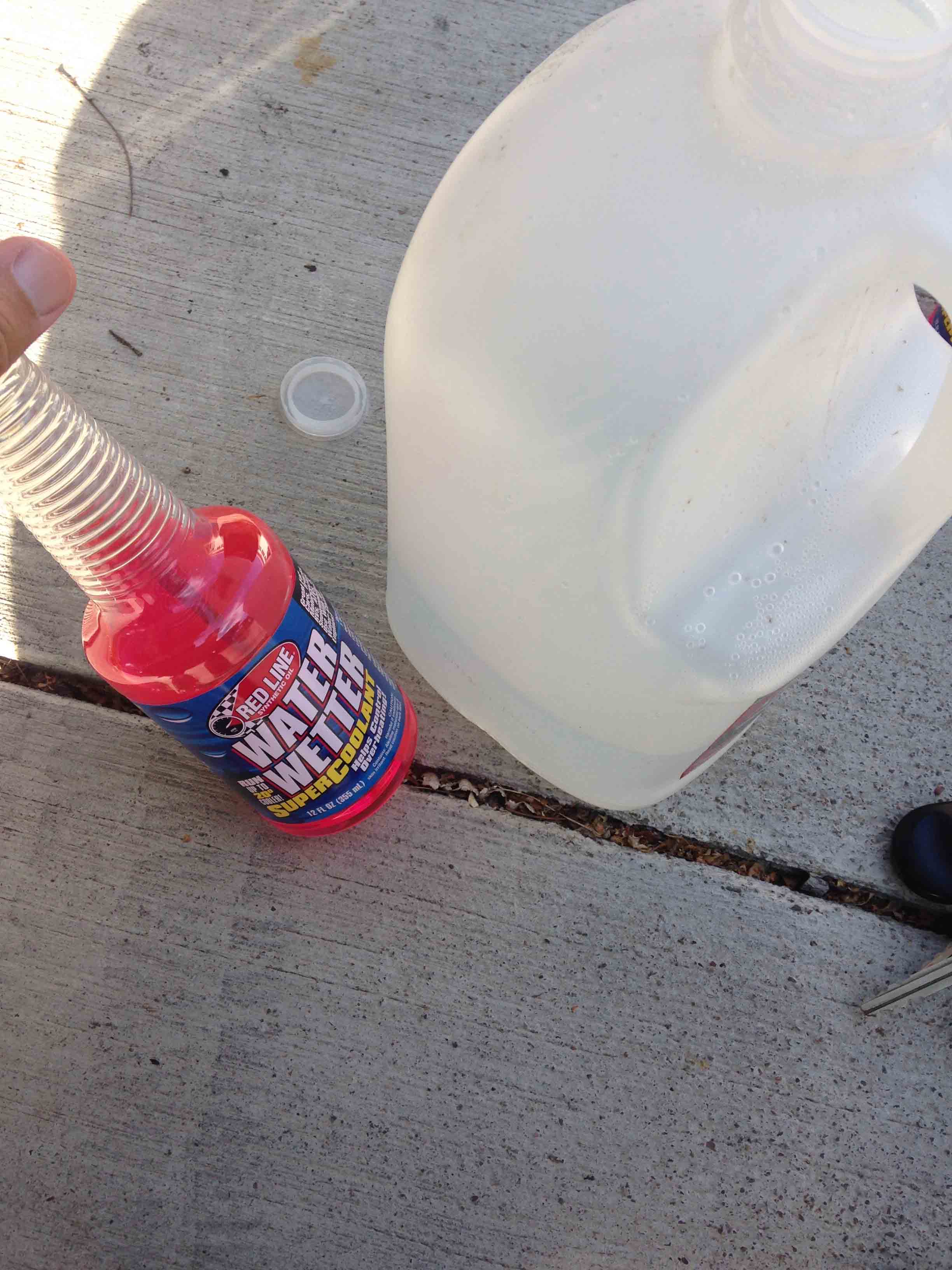
Adding a bottle of WaterWetter to my distilled water-filled cooling system. It’s good to mix it up with some distilled water in a jug before adding it to your radiator. You should drive the car immediately to normal operating temperature to ensure thorough mixing in your system.

screen2

I haven’t checked this home made coolant screen at my upper hose connection to the radiator for months. It was still there and this is the little crud that was captured by it. I replaced it with a new copper mesh screen.
wfm

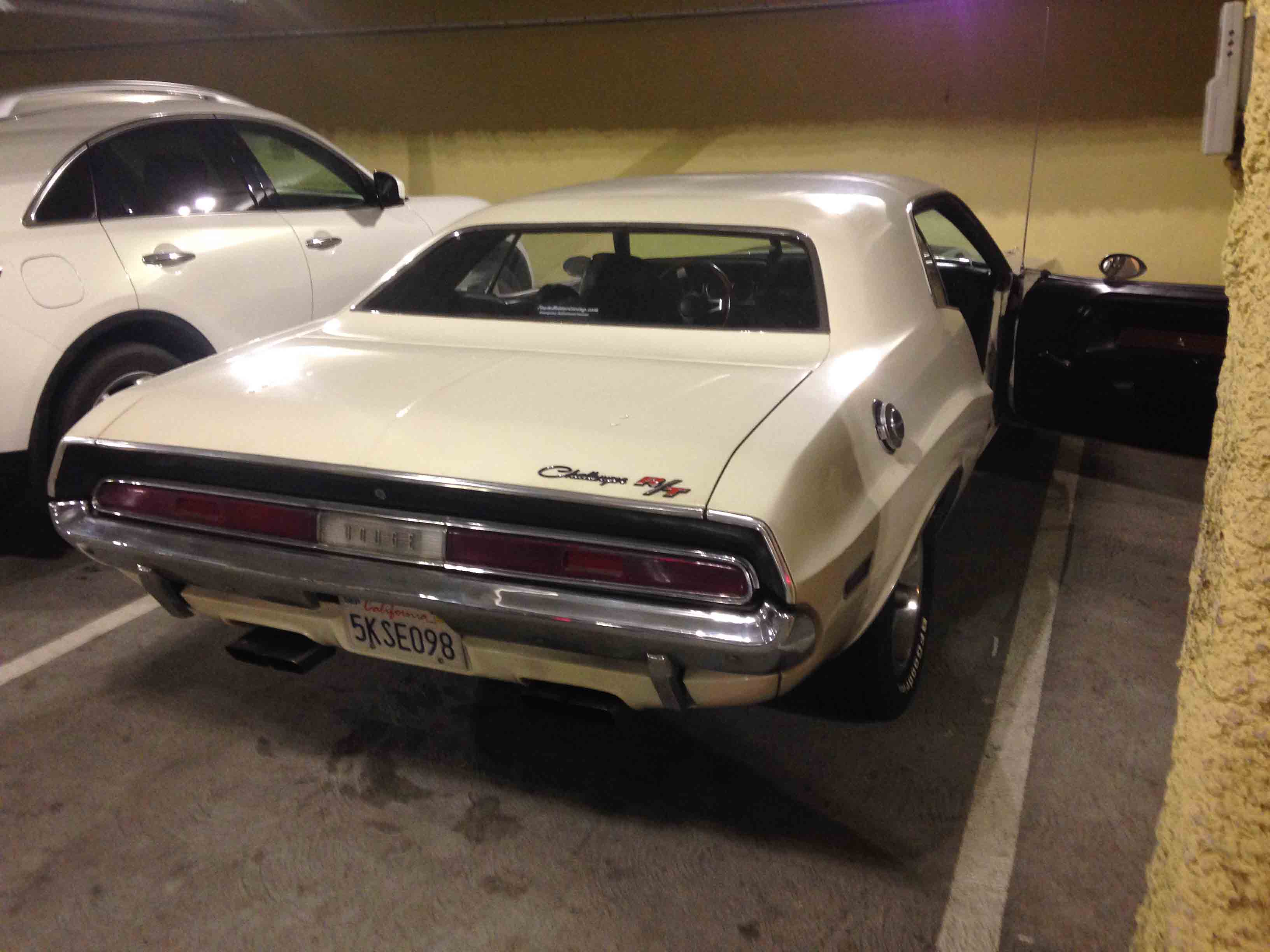
In the underground parking lot of a Whole Foods Market, doing some grocery getting with with th skids and  the 440 six pack Challenger. Right before I was pacing a blue Cobra roadster going down El Camino Real. THe traffic was too heavy for me to catch up with him but it would have been a pretty sight for onlookers to see a Cobra and a Challenger lined up at a stoplight on a Sunday afternoon in Silicon Valley. Nothing like stalking a Cobra to keep your mind focused on driving.


vida

Here’s we’re parked in downtown Menlo Park in front of one of my favorite restaurants, Vida Bistro, where my wife and I got engaged in 2000. But today, I just parked her to take the kids to the local Stone Cold Creamery for some ice cream. Good thing the reverse lights work on this car! And getting out of these spots is easier for steering the manual box.


How does it feel to drive a 440 Six Pack Challenger in traffic and boiling summer heat?

It is hot, especially wearing work attire. Although it’s nice to have the A/C from my other car, opening the windows makes the heat tolerable. Wear sunscreen to keep from getting burned!

I’ve got a little exhaust fume problem. Opening one window tends to suck in some exhaust into the interior, but opening both sides tends to keep keep the smell in check more. The fumes and for general performance I want to add a multiple spark ignition to the 440.


How has the cooling system handled keeping the engine from puking coolant in traffic jams?

The cooling system has worked admirably, quite admirably, despite sitting in traffic jams, stuck mostly in first and second gear creeping  along in near 100 degree heat. The temperature gauge tended to rise into the middle range on the temp gauge, which from my experiments with the laser thermometer means the temperature is closer to 220 degrees rather than 180-190. The engine never regurgitated any coolant.

When I changed the mesh filter in my upper hose, I noticed I was slightly low on coolant, but still covered the radiator core. When I topped the system off, I added a bottle of Water Wetter and mixed it first with some distilled water before adding it to the radiator and overflow jug. Putting it in right before driving helps ensure thorough  mixing. Adding it seemed to do a better job controlling the temps.


How has it been driving a manual transmission with a CenterForce clutch?

Survivable. The pedal pressure is reasonable for a performance clutch. What takes muscle is shifting the transmission when it gets moody. Sometimes coming out of 5th gear to down shift it feels like the shift pattern gets  a little confused. This problem would never occur with the 4 speeds I’ve had in the past.


How has the Richmond 5 speed been shifting?

With the 5 speed Long shifter on the Richmond, the 1st 2nd gate is spring loaded, where the natural alignment (unsprung) is the 3rd-4th gate. 5th requires pushing against a spring and reverse (under 5th) requires downward pressure which virtually eliminates the chance of accidentally going into reverse and thereby scattering your transmission across the highway. So when you’re coming out of 5th, sometimes the resistance going to the 1st-2nd gate is not enough to keep from missing a clear shot into 3rd or 4th. Does that make sense? The result is, you have to be more aware than you would normally like to make a well executed downshift. Usually the down  shift  goes hard into gear also requiring a momentary conjuring of The Incredible Hulk’s arm.

Getting into gear most of the time is like what you’d expect, a nice low effort throw and snap into gear, but sometimes it doesn’t go into 3rd with the  Midas Touch, it takes Rocky Balboa to ram it, but it goes.

My old Ford Toploader with a clean shifter and I’m sure a good 833 Mopar tranny shifts a lot easier than this monster. 3rd gear takes the most muscle as sometimes I just have to just have let that gorilla know who is boss. Actually, I think it would be nice to have a 6 speed TREMEC and be able to keep the RPM’s low on the highway and get better mileage. Right now, with the 2.94 rear axle gears, 65 mph (about) in 5th gear puts the engine at about 2300-2500 RPM, which is not bad, but the engine has so much torque, and in reality, typical cruising speed is 70-80 mph near 3000 RPM.

I’ve considered changing tranny oil from the Mobil 1 that’s in there now, to Pennzoil Synchromesh Fluid, which is similar to what’s used in Corvette transmissions. I’ve read is can help make shifting easier, but for now, I’ll opt for the added protection of the more conservative and heavier Mobil synthetic (which is what I used in my Mustang’s top loader).

Road and Drag Racing Tip: When performance driving, with the way my car is running with the Richmond, I plan to stay out of 5th gear. If I treat it like a four speed, shifting is a lot more predictable. 5th gear( which is a direct 1:1)  with the 2.94’s I’m running in back is just meant to be “cruise” mode.  If I’m in road course mode, pretend it’s just a four speed. Moreover, 3,000 RPM launches work out with minimal tire spin if I don’t mercilessly hammer the throttle right off the line .


How much gas am I sucking up?

I fill up once a week (4-5 days of driving) going to work. 30 miles to work and back, I’m estimating about 10-12.5 miles per premium gallon in commuter traffic. If I start stomping on it, that can change quickly. My old 71 Challenger with a 383 (2 barrel cam) got about 15.5 on the highway with 3.23 gears on regular gas.

It’s nice after I fill up because the fuel gauge stays on “F” for about a day, before it starts it rapid descent toward “E” (the 16 gallon tank). Quite frankly, it makes my want to opt for the 4 cylinder option (instead of the V-6) on my next daily driver, just to reduce the trips to the gas station, just to restore the Yin-Yang balance to life. That’s not to say it isn’t fun driving the big Mopar, it IS fun and it get’s attention from car enthusiasts in a way that a Honda Accord  would never get.


What kind of modifications would  I like to make to the car after using it to commute for several weeks?

So much time is spent under 3000 RPM when commuting, it is worth getting a multiple spark discharge ignition. I like the Pertronix Billet distributors. Despite retiring the Prestolite Dual Point, which was old and ran like hell, I used a Pertronix in my 1970 Challenger T/A and it worked like a charm, and that only had the basic Pertronix Ignitor. The one I’d get for the 440 uses a Ignitor III with has a hotter, multispark, and rev limiter unit inside. More power, better gas mileage – what’s not to like? That’s what’s great about modifying a driver and not having to adhere to the requirements of a show car.

I’d like to get my seats reupholstered because ever since I’ve had it, the driver’s seat right side is sagging, probably from the hard driving as a drag car. Plus I hate the “drug dealer” tuck and roll upholstery.  I like the stock looking Legendary stuff I have in storage. I’m getting used to that also, but I’m sure it’s not good for my back’s alignment.

It would be nice to finally get the exhaust smell removed from the interior. I have already reduced much fumes by, in the past, changing the trunk seal and the grommet that seals the gas filler tube to the gas tank. But it still can smell. I’m hoping the Pertronix ignition will help.

The manual steering is okay, and although it takes strength to turn that thing in a parking lot, what I would really consider fixing is removing the about 10 degrees of play in the steering. The excess play makes driving down a straight highway more of a conscious effort than it should be. It’s pretty tolerable in most circumstances. Driving the car on a regular basis helps a lot in getting used to how much muscle it takes to handle it. If you’re used to driving power steering most of the time, it can be a pain, but once you eliminate the memory of wimpy arm power steering, you accept the fact that having another inch on your biceps is a welcome addition to your physique.

Whether that’s just an adjustment or requires replacing the steering box, I have yet to figure out. It would be nice to have a faster steering ratio, ala, my old GT-350 clone (which had about a 2.75 turn lock to lock) or my old T/A which with a fast pitman arm had about a 3.5 turn lock to lock is something that is nice. I like the manual box because of the road feel, but steering can be a pain in the arm, literally. And between the Richmond tranny and the manual steering, driving this Challenger can be a real work out. Stay in shape if you want to drive a non-power assisted muscle car.

***

Reminiscing about the Mustang: I remember I actually liked using the 70 series (Michelin) tires in my Mustang on the street instead of the 50 series Comp T/A tires I used on the track since turning the 70 was a LOT easier with the manual steering box and fast arm. Handling with 70 series had much to be desired (pretty much mush), but nothing you couldn’t handle through slide control. The Mustang was lighter and had  a 289 which helped.


..   If you enjoyed this post, please LIKE SHARE COMMENT

The Dodge Kid in his youth about 1976. I think I wore this hat everyday through my Freshman year in high school. Photo by Nick Yee

The Dodge Kid in his youth about 1976.

Copyright © 2015 ChallenYee.com TheDodgeKid.com BestBuckBuck.com  TeamBetterLiving.com All Rights Reserved.

.

Minor 727 Torqueflight Issues

I was doing some work on my other 1970 Challenger R/T, replacing the transmission filter and pan gasket plus fixing a bad connector for the reverse light. These things are normally something that could be done in an afternoon but when you’re working on a car that’s 45 years old and has had some engine and tranny swaps, the job may not be straightforward.

  1. Wire color code may not match replacement part.
  2. Transmission filter size varies between mid 60’s and 70’s

These are the kinds of issues that can occur when the car no longer has the original equipment and when previous owners or mechanics don’t care about maintaining vintage consistency. Problem may occur with the lack of correct matching parts availability, for example, a wiring harness or transmission.

I have not run into these specific problem before so without taking anything for granted, I was able to trial connect the 3 wires leading to the new electrical connector, but I am not willing to replace the filter without someone else confirming the interchangeability of the filter.

So  here are some notes and photos about my work in progress.

tranny1

That’s enough clearance to access the tranny pan and reverse-neutral-safety switch which has a broken connector. The tranny pan leaks, so the gasket and filter will be replaced.

tranny2

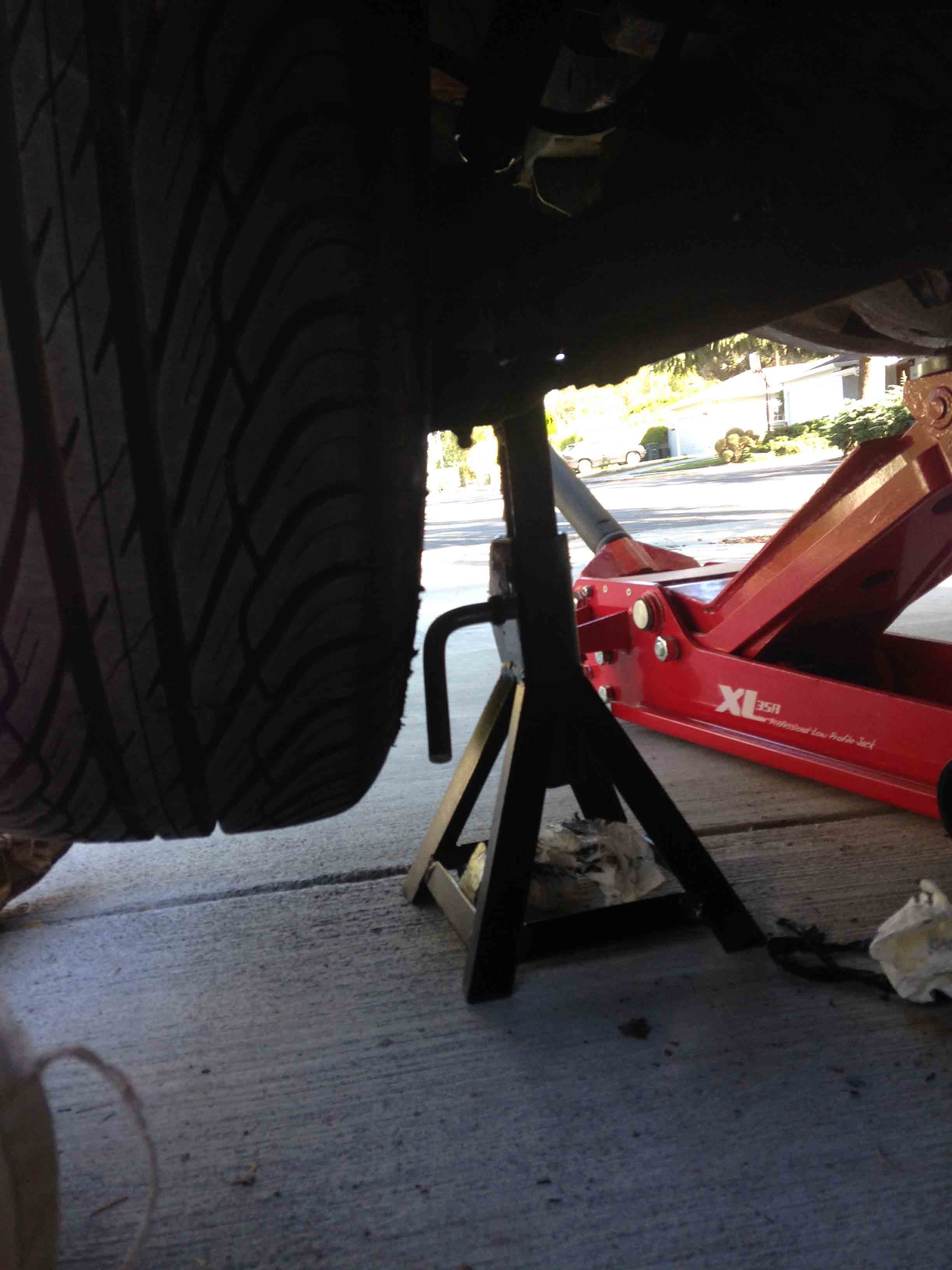
I hate it when people work under a car without jack stands. I was run over by a car many years ago, so I am gleefully paranoid about having another, much heavier car fall on me. Here’s a point to place a stand under the lower control arm.

tranny3

Stand number two: under the frame near the tranny crossmember.

tranny11

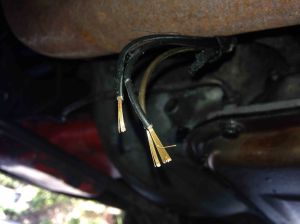
My reverse lights don’t work, so a place to check is the connector or the safety switch located on the left side of the tranny slightly above the pan. The wires were broken at the connector.

tranny10

Peeling back a few inches of black electrical tape that was very greasy, I exposed the three wires. After taking a cloth to clean off the residue, I checked the wires to see if they were brittle. They felt okay and so I cut back a couple of inches before stripping the ends to connect to the new lead wires extending from the new connector.

tranny13

The color coding on the new connector didn’t match what was on the car, but there was enough correspondence that I could guess the first time the right connection. The new connector comes with a black, purple and brown wire with yellow stripe. The existing wires are brown, black and what looks like black with a white stripe. I temporarily connected the brown wires together, the black wires together and the purple and black striped wire together. THe reverse light works and the engine can turn over in neutral.

tranny9

YES! It’s a great feeling to fix anything with the car. There’s got to be some weird genetic switch that gets triggered when an you get something to work that was broke.

tranny6

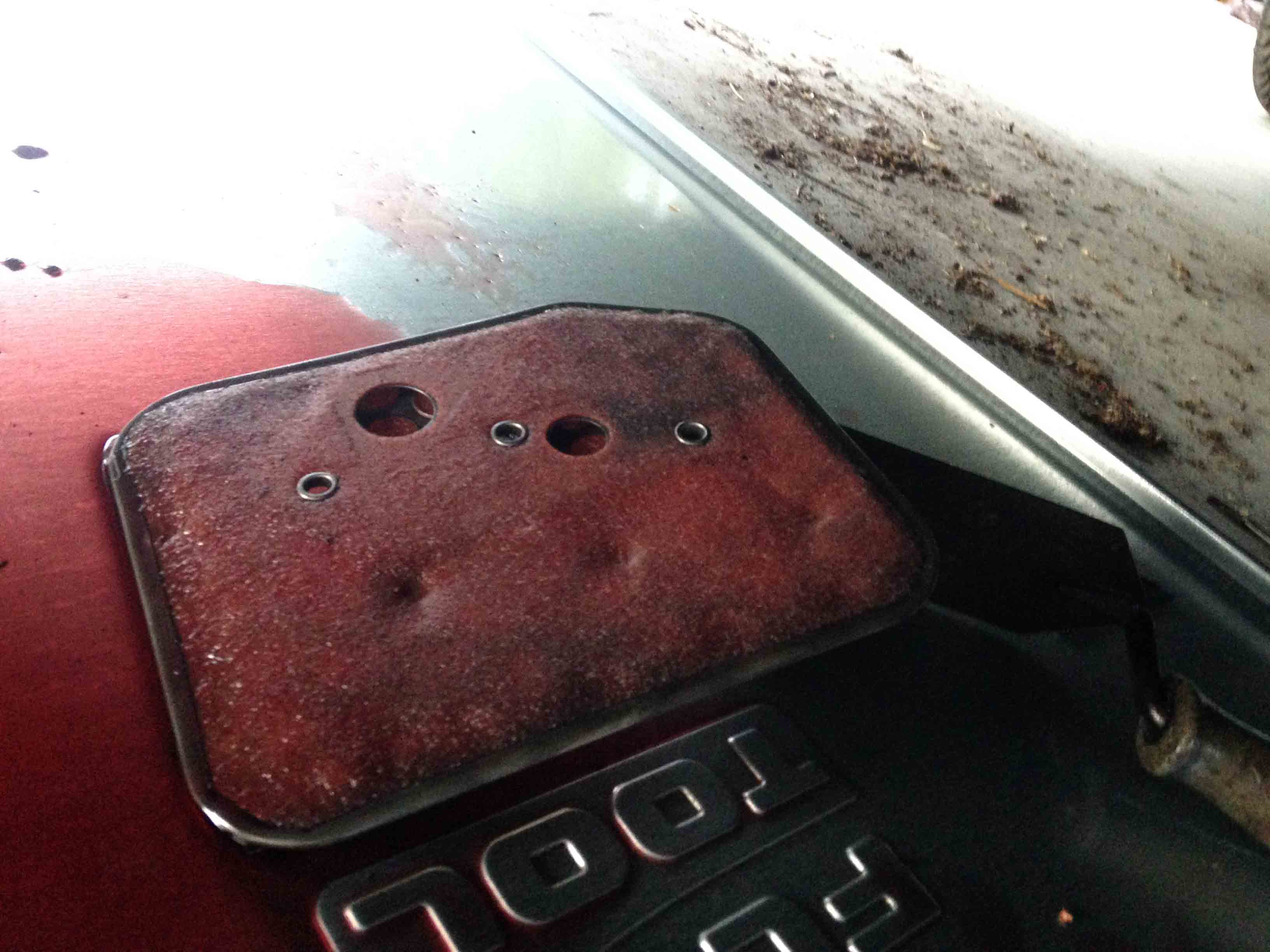
The new filter, which is designed for the 1970 B-727 Torqueflight is bigger than the old filter which I suspect is from a 1967 type 727.  The car originally was equipped with a 4 speed and some previous owner converted it to an automatic., apparently an older than 1970 version. The filter mounting holes are the same.

By the way, to remove a transmission pan that is not equipped with a drain plug, you need to loosen the screws and while retaining loosened screws on the “uphill” side, carefully pry apart the pan from the tranny on the downhill side and let the fluid drain into a larger vessel (like a large oil drain pan). I used a broad tip flat tipped  screwdriver to pry the pan enough to break the seal. Make sure you do not chip the sealing surface, avoid bending the pan, or possibly damaging anything internal with you prying instrument. Make sure the retaining screws are adequately loosened to allow the pan to tip at an angle without bending any metal.

Once the pan is off, expect a little more fluid to drain when you remove the filter.

tranny4

The top side (tranny valve body side) of the new filter has one hole.

tranny15

The top of the old filter, has two holes. One is in the same location as the new/larger filter. There is enough differences, that I, who do not have experience or knowledge in this area, am unwilling to ASSUME, that sticking the new filter is going to work. THe last thing I need is to seal this tranny back up with a filter that doesn’t work. Your expert or knowledgeable feedback is welcome.

tranny7

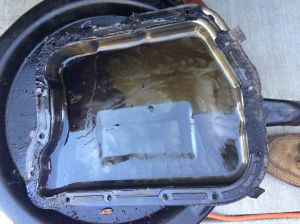
Here’s the dirty pan with the old gasket. Sealant was used on the bottom, but not on the top (facing the transmission). I’ve read several recommendations that no sealer should be used to avoid sealer from getting loose into the tranny fluid.

tranny14

A wide bladed instrument like this old trowel worked well to scrape the old gasket and silicone like sealer of the pan. Avoid gouging the sealing surfaces.

Do you know for sure?

If you know if the larger filter is safely interchangeable with an older type, please comment.

About my keys…

I DID have a hard time looking for my keys which was a drag because I could not check the reverse light function without them, but I finally found them in one of those places that I thought safe and I would not forget…

..   If you enjoyed this post, please LIKE SHARE COMMENT

The Dodge Kid in his youth about 1976. I think I wore this hat everyday through my Freshman year in high school. Photo by Nick Yee

The Dodge Kid in his youth about 1976.

Copyright © 2015 ChallenYee.com TheDodgeKid.com BestBuckBuck.com All Rights Reserved.

.

Racing Fuel Blues?

I will float a recent experience out there about hard starting, feel free to comment.


Done. The test drive that day revealed NO popping out the carb. I thought I had fixed the problem. But as I push the engine harder, like I did the following weekend. It still backfires through the carb under harder acceleration. When this thing stops popping, it is going to accelerate like mad money. Notice the 340 decal - this air cleaner assembly was from my Challenger T/A when I first bought it. It was the wrong assembly for a small block, but correct for a big block. I sold the T/A a few years ago, it was completely restored with the correct small block T/A air cleaner. I may keep this decal on just as a remembrance of the old car and to mess with people's minds.

Sucks when you’re ready to jump in the Challenger and take it to work and then you can’t start it. By the way, there’s a story behind the “340 six pack” decal when it’s actually a 440. It’s off my old 340 T?A and I kept it for the memory.

A few weeks ago went to the local 76 Station that carries Racing Fuel and decided to put in a mix of Premium and Racing Gas.

After sitting for a few weeks and after some hot weather, not sure if that had anything to do with it, I tried starting the Challenger in the morning and could not start it. I got some starting fluid and nothing.

Sort of suspecting the engine was flooded, after I came back from work in the late afternoon and tried to start the car and, it started immediately.

A week later, still with the same mix of gas, the same thing happens. Exactly the same thing happens, down to the late afternoon immediate starting.

So the second time I drove out to the nearest gas station and put some regular low octane in the tank to neutralize the racing gas. Since then, knock wood, I haven’t had the problem and I’ve driven the Challenger several times this week.

(By the way, even in 90 degree weather in rush hour traffic, the engine runs cool as a cucumber).

I’m not sure if the racing gas, which burns more slowly than regular or premium, was the culprit, but I’m thinking it was.

I’m speculating with the particular setup in my engine, from the carb jets, compression, and type of ignition and timing, it is just not liking racing fuel.

I know that it’s best to run the lowest octane gas your engine can run safely on, without pinging, since lower octane gas actually contains more power and the additives commonly added to higher octane fuel have nothing to do with producing power, rather they are mainly to control preignition problems.


What do you think is going on?


..   If you enjoyed this post, please LIKE SHARE COMMENT

The Dodge Kid in his youth about 1976. I think I wore this hat everyday through my Freshman year in high school. Photo by Nick Yee

The Dodge Kid in his youth about 1976.

Copyright © 2015 ChallenYee.com TheDodgeKid.com BestBuckBuck.com All Rights Reserved.

Bilstein Shock Installation and Road Report

TBT – I dug out an old email I sent to Firm Feel Suspensions up in Vancouver, Canada after I installed a set of new Bilstein shocks on my 70 440 Challenger back around New Years of 2013.

I figure you might get a kick out of it.

In the back parking lot of Palo Alto High School, the boys' gym in the background. Same building as in 1980 and many years before, but we didn't have the cool looking Viking Ship paint job back in then.

In the back parking lot of Palo Alto High School, the boys’ gym in the background. Same building as in 1980 and many years before, but we didn’t have the cool looking Viking Ship paint job back in then.


—-Original Message—–
From: challen yee [mailto:challenge@sbcglobal.net]
Sent: Sunday, January 27, 2013 8:55 PM
To: Dick Ross
Subject: Re: Bilstein Shocks RCD 70 challenger

Hi Dick,

I finally installed my Bilsteins on my car this weekend and have my initial report.
First, the installation was straightforward. I haven’t replaced shocks on a Challenger since I was in high school in about 1978, but fortunately, my memory came back and remembered the little techniques to make the job go smoothly. The main one was using a 10 inch cresent wrench to open up the lower control arm mount just enough to gain enough clearance to tap that lower front shock mount home.
The trick on the rear shocks is that the upper bolt needs to be hand installed from the bottom of the car, sitting facing the brakes with the head in the wheel well. Tightening happens with the 3/4 box holding the self locking nut through the trunk to hold while tightening the bolt from the bottom.

The rears, fortunately have clearance in the upper mount that no problems occurred when slipping the upper mount in.

All this was done in my driveway while my wife was out on errands.  (LOL)

First, it’s nice to hold in my hands some quality shocks and say good bye to the old monroe-matic garbage. I noticed the Monroes had some pressure in them but nothing compared to the effort required to collapse the Bilsteins.

Initial driving impressions. Getting quality shocks makes my Challenger more composed and mature.

The ride quality improvement is definitely noticeable, especially on the highway at speed. I can go 80 to 90 easily without the shuddering from all the imperfections in the road. Down here in the Bay Area we’ve got a lot of highway reconstruction going on so the pavement is a mess. Before with the old shocks, you’d need some spinal traction to stop your back from feeling every crack in the highway.

THe Bilsteins smooth things out, I wouldn’t necessarily say it was a surprise, because the reputation of the Bilsteins preceded my ordering them, but definitely, they meet my expectations in terms of ride. Very nice.

The second test was stopping. Low speed and highway speed hard braking.
This is an area there is also very noticeable and welcomed improvement.

The big difference is the apparent departure of what my 9 year old son calls “Cartoon Stops.” That’s when I’m hard braking and the rear end is unweighting the back tires so they start screeching, unable to grab the road. It’s the epitome of a stereotypical big block muscle car trying to stop.

Well, that has changed after adding the Bilsteins. The car has a more mature attitude, more composure when stopping, as the shocks help keep the big e-body’s weight balanced the right amount to keep the tires planted on the road. Even the tires are some old BF Goodrich T/A’s,I’m getting some solid performance now out of them (eventually I want to get some better tires after I burn these out).

I used to auto cross a mainly-track-driven 1966 GT-350, so it’s nice to get some of this awesome handling in my street driven 1970 Challenger 440 R/T. THanks to Firm Feel, I’ve got a Mopar that is more fun and more drivable.

I haven’t taken enough turns to get solid impressions on how the car handles but I’ll send a note after I get some data together.

Thanks,
Challen

—END EMAIL

..   If you enjoyed this post, please LIKE SHARE COMMENT

The Dodge Kid in his youth about 1976. I think I wore this hat everyday through my Freshman year in high school. Photo by Nick Yee

The Dodge Kid in his youth about 1976.

Copyright © 2015 ChallenYee.com TheDodgeKid.com BestBuckBuck.com All Rights Reserved.

1970 Dodge Challenger Trans Am

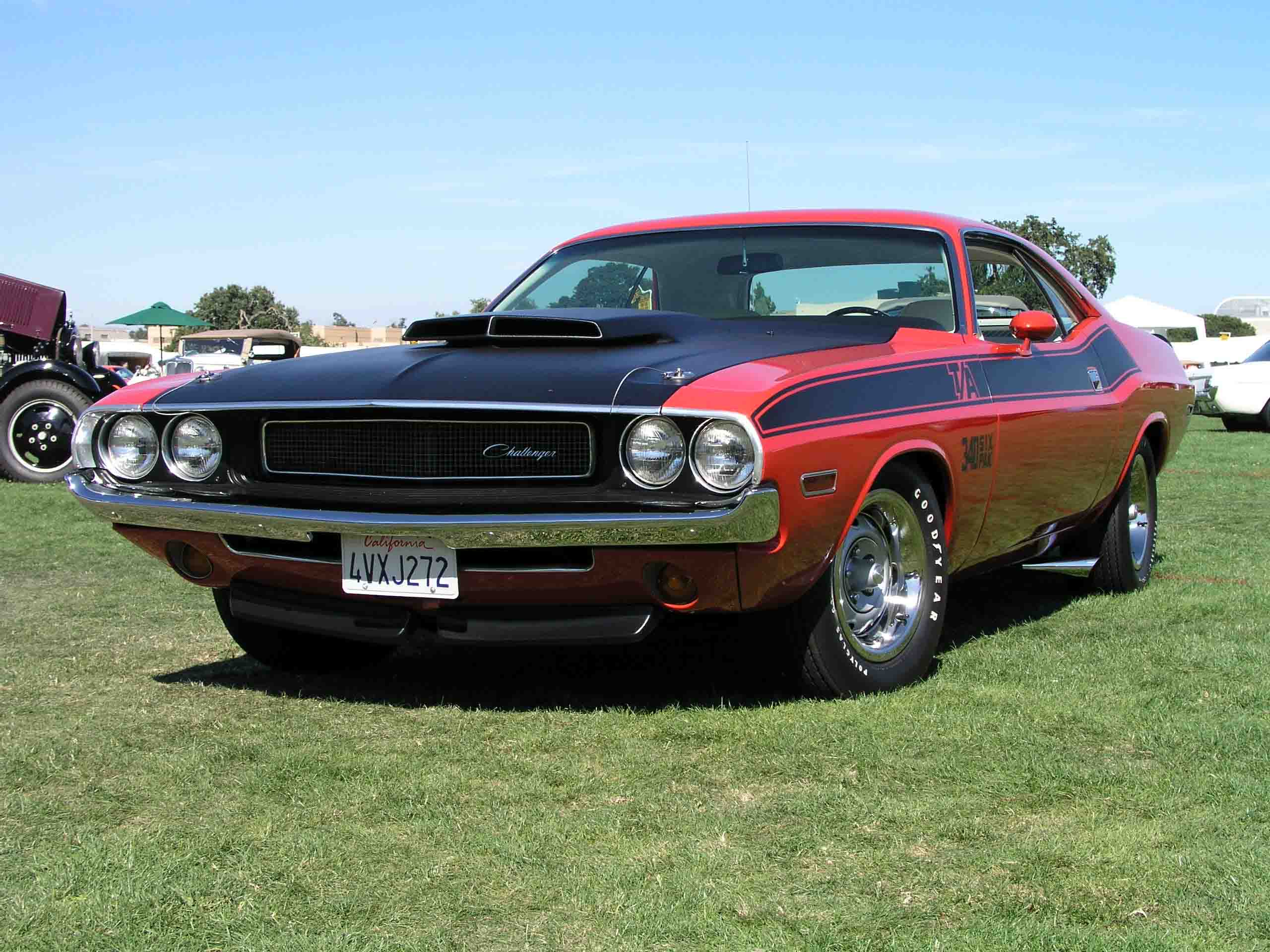
The following write up was what I used for my car show placard when I showed my Challenger T/A at car shows.

Article and Photos by Challen Yee

OLYMPUS DIGITAL CAMERA

1970 Dodge Challenger Trans Am

By Challen K. Yee with excerpts from “Dodge Challenger and Plymouth Barracuda” by David Newhardt (2000)

“Chrysler was a bit tardy in getting a factory entry into the SCCA Trans-Am racing series. Both Ford and General Motors had been slugging it out with Boss 302s and Camaro Z-28s. “The gang at Mopar wanted some racing glory to rub off onto their line of street cars, so they dove into the fray for the 1970 season. The rules required that the manufacturer build 2,500 street models of its racing car. To this end, Chrysler released All-American Racers (AAR) `Cuda and its cousin, the T/A Challenger…

“2,142 Challenger T/As were put on the road. All of these were built in a five-week period in March and April of 1970.

“Unlike the racers, which had to use a 340-ci engine destroked to 303.8 ci and topped with a single four-barrel carburator, the street versions were powered by a Six-Pak-equipped [three two-barrel Holley carbs combining for over 1300 cfm] 340-ci engine.

“The iron block was stressed relieved, and the main bearing area, while delivered with a two-bolt main, had plenty of material for the fitting of four-bolt main bearing caps. [Furthermore, the block had a higher nickel content and the heads were also a special T/A item designed to allow more radical porting by the use of an offset rocker arm system which relocated the valve pushrods].

“The engine was rated at 290 horsepower at 5,000 rpm, but redline came up at 6,500. “The Challenger T/A was modeled after the Trans-Am racer Sam Posey wheeled around the Trans-Am series. Its fiberglass hood was influenced by the belly air scoop on the P-51 Mustang fighter plane, and Dodge pulled it off beautifully.”

(The following excerpts are from David Newhardt’s “Dodge Challenger and Plymouth Barracuda”).

The standard rear axle set was 3.55:1 which according to Car & Driver magazine’s July 1970 issue helped deliver 0-60 in 5.8 seconds and a quarter-mile time of 14.3 seconds at 99 mph. Optional gear sets included 3.91 and 4.10 housed in the mighty Dana 60. The transmissions, both the A-833 manual and the A-727 automatic were “big-block” pieces designed to be mated to the hot performing “small-block” 340. Some of the distinctive standard equipment on the T/A models were: front disc brakes, E60x15 Goodyear tires in front and G60x15 on the back, higher rate front and rear sway bars, torsion bars and rear leaf springs, side exit exhaust, frame stiffening features, special stripe and decal treatments, fiberglass hood, and front and rear spoilers. Some of the many popular options included: fast ratio steering, rally gauges, dual painted mirrors, vinyl tops, and a myriad of awesome colors for both interior and exterior.

OLYMPUS DIGITAL CAMERA

OLYMPUS DIGITAL CAMERA

The Annual Concours is no longer being held at Stanford University. Not sure for which political reason.

OLYMPUS DIGITAL CAMERA

OLYMPUS DIGITAL CAMERA

Non-matching numbers TA engine out of a AAR Cuda that got totaled in the late 1970’s. The father of the owner saved it in a garage in central California until I bought it through an Ebay auction. The restoration was meticulously performed by Restorations By Julius in Chatsworth, CA.

OLYMPUS DIGITAL CAMERA

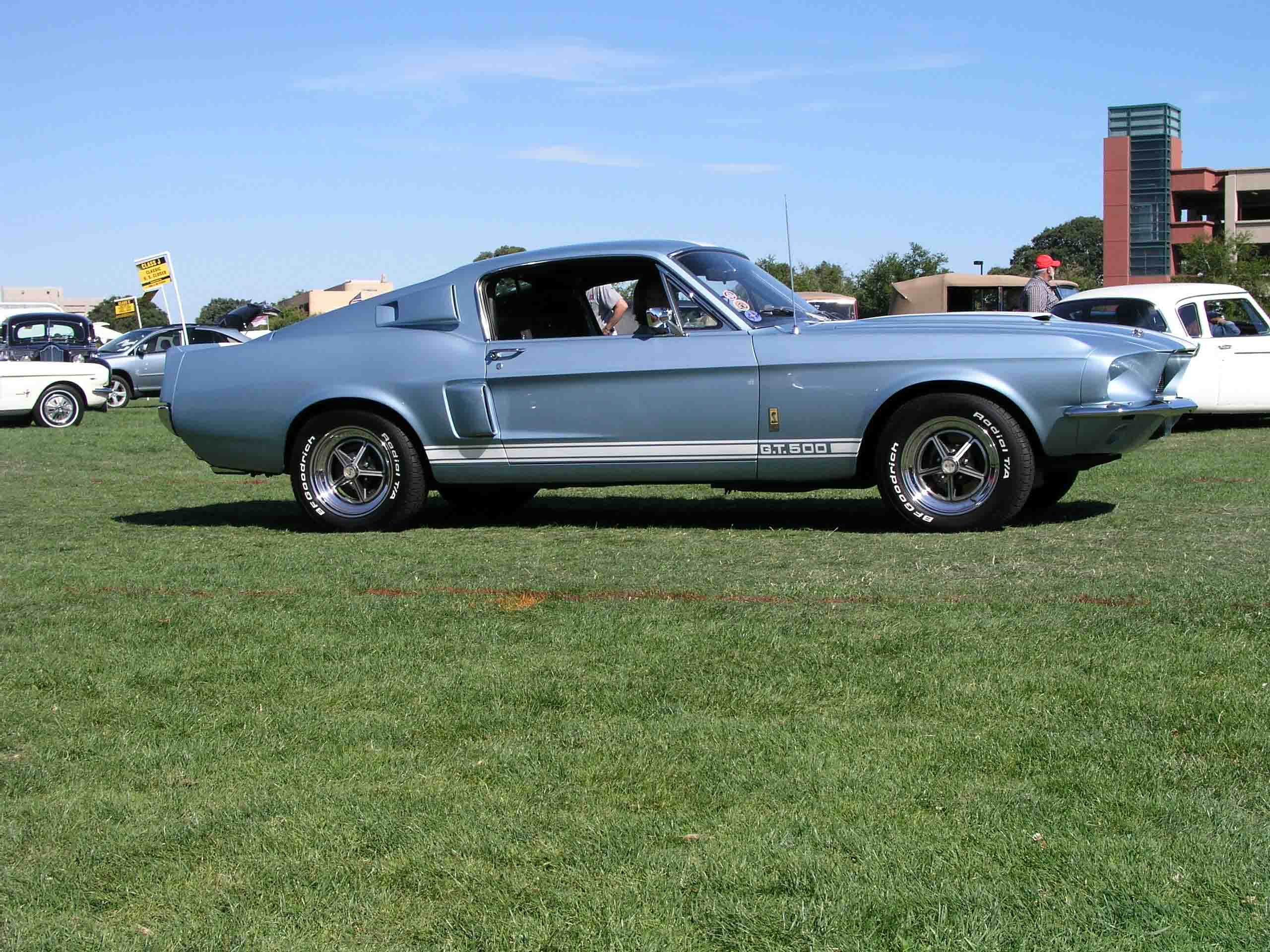
My friend Scott Douglas. “The Shelby Kid” and the Ford guy at school,  he’s owned several Ford products in his life including a Shelby like this one. Shelby’s are also one of my favorite non-Mopars, having been a Mustang owner in the past I had a lot of fun with the NorCal Shelby Club at open tracks.

OLYMPUS DIGITAL CAMERA

Simply one of my favorite non-Mopars, and with respect for my old departed friend Rick Elliott, who was the Chevy guy in school.

OLYMPUS DIGITAL CAMERA

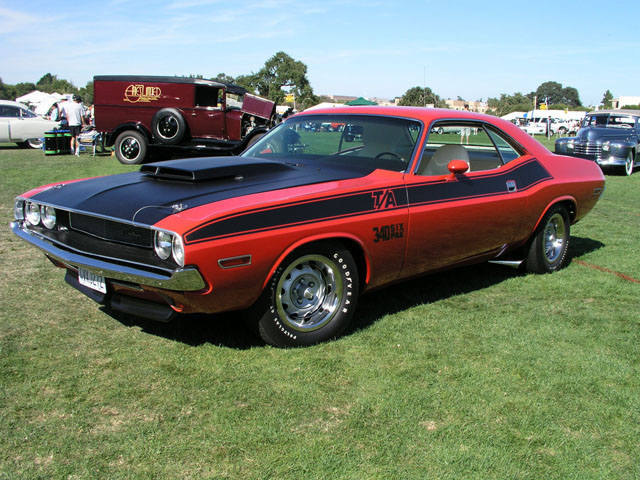
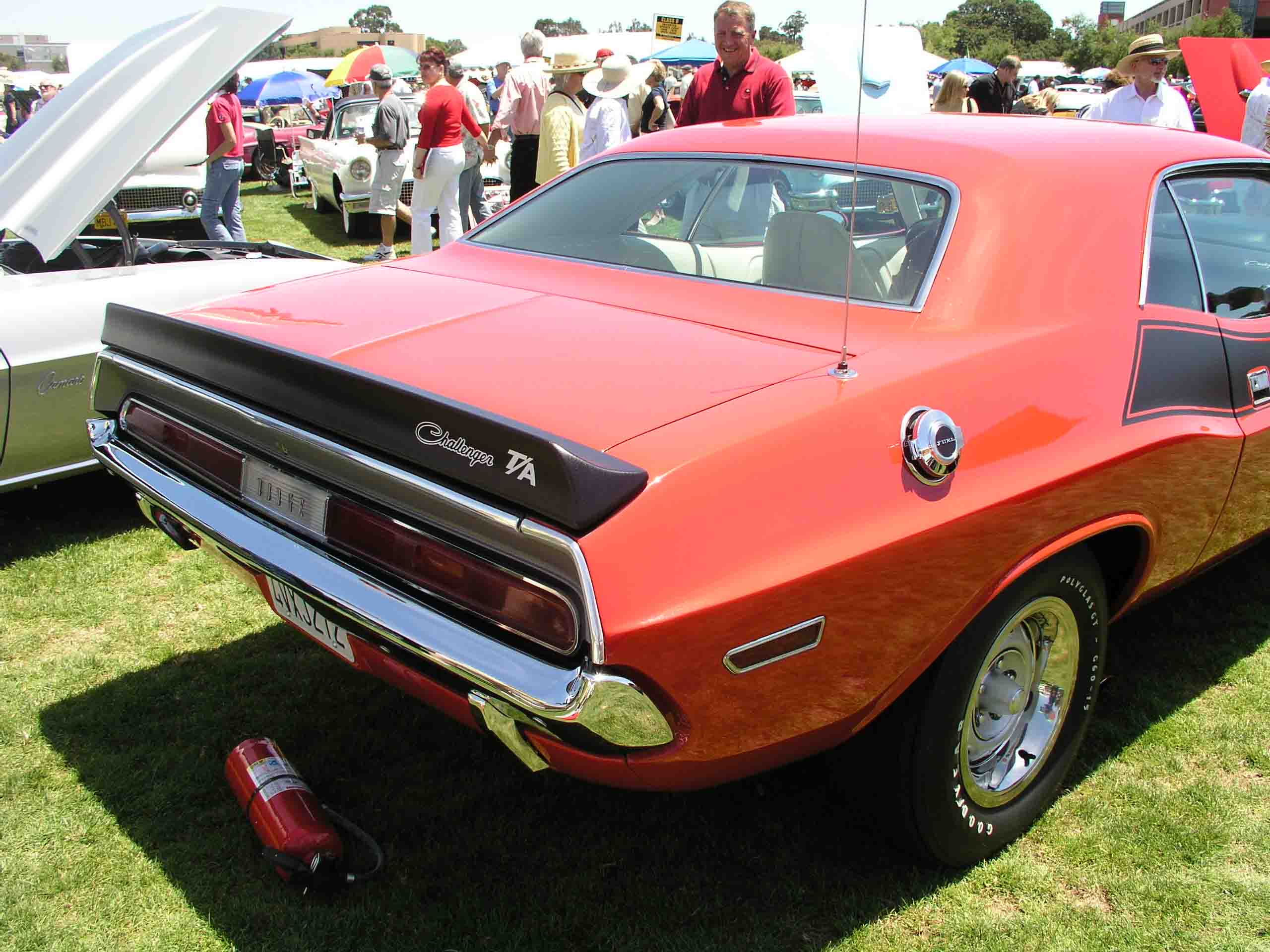
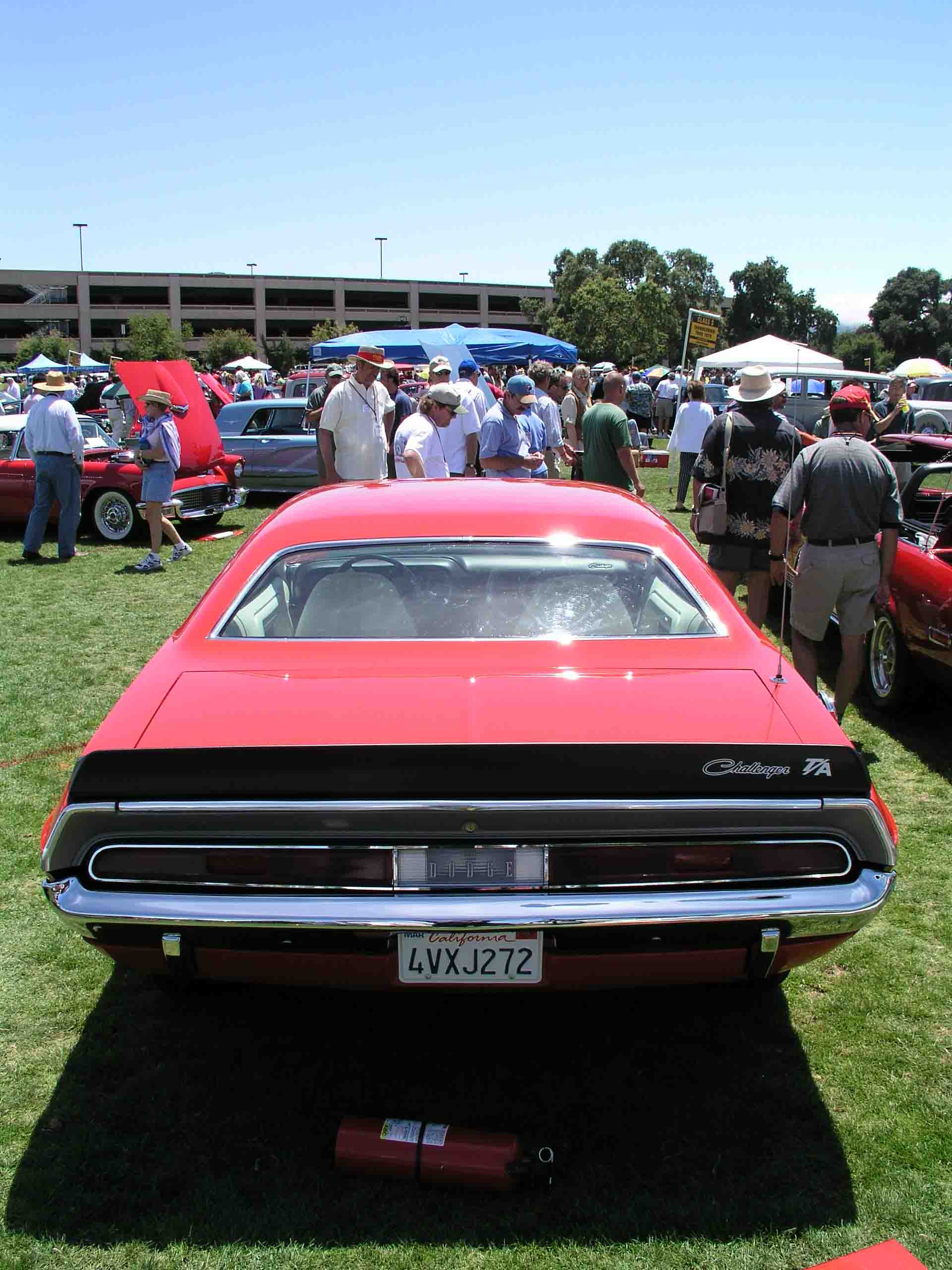
Let’s end this article with my old garage queen MoPar. As life would have it, I no longer own this Challenger. Sure was nice.

..   If you enjoyed this post, please LIKE SHARE COMMENT

The Dodge Kid in his youth about 1976. I think I wore this hat everyday through my Freshman year in high school. Photo by Nick Yee

The Dodge Kid in his youth about 1976.

Copyright © 2015 ChallenYee.com TheDodgeKid.com BestBuckBuck.com All Rights Reserved.

1978 – 1985: The Days of My First Challenger

Note: This is a continuation of previous posts about experiences during my teenage years in the late 1970’s. I’ve been looking for the rare photos I had of the car but I haven’t been able to find the few I remember having. If I find them I’ll update this story’s photos (which I have with some old photos).

I recently was contacted by a few of my old high school streetmachiner friends who discovered this blog and it was a pleasant surprise to hear about some of their car experiences over the last decades. So it’s with you all of you guys in mind that I post this article, hope it helps bring back some pleasant memories.

It was a fun and fascinating time, those days searching for my first car. I had two close car buddies, Scott Douglas (The Ford Expert) and Rick Elliott (The Chevy Expert) who together through junior high school and the early days of high school, would spend more time than we should have day-dreaming about life cruising the streets, roads and highways. Rick was the first one to get his car, a 1955 Chevy Bel-Air Wagon which he wanted to restore, so it sat in his backyard for what seemed like years. Then Scott got his 1967 Mustang fastback, which he kept in his driveway as it went straight into customization mode, which over those early years became a local legend, a wimbledon white GT-350 styled ground pounder with gold stripes. Then I found my 1971 Challenger, which, by the way, was the first one that was able to be driven.


A summary of the High School Days with my first Challenger


The Family Outing

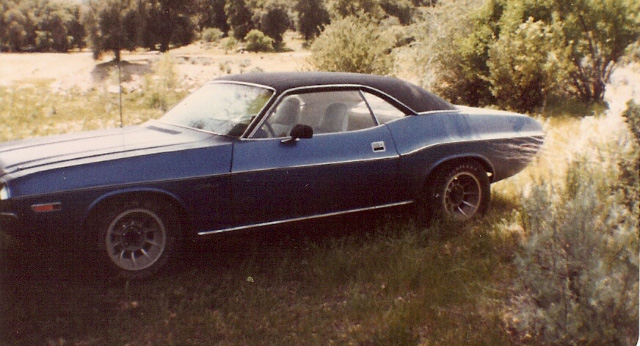
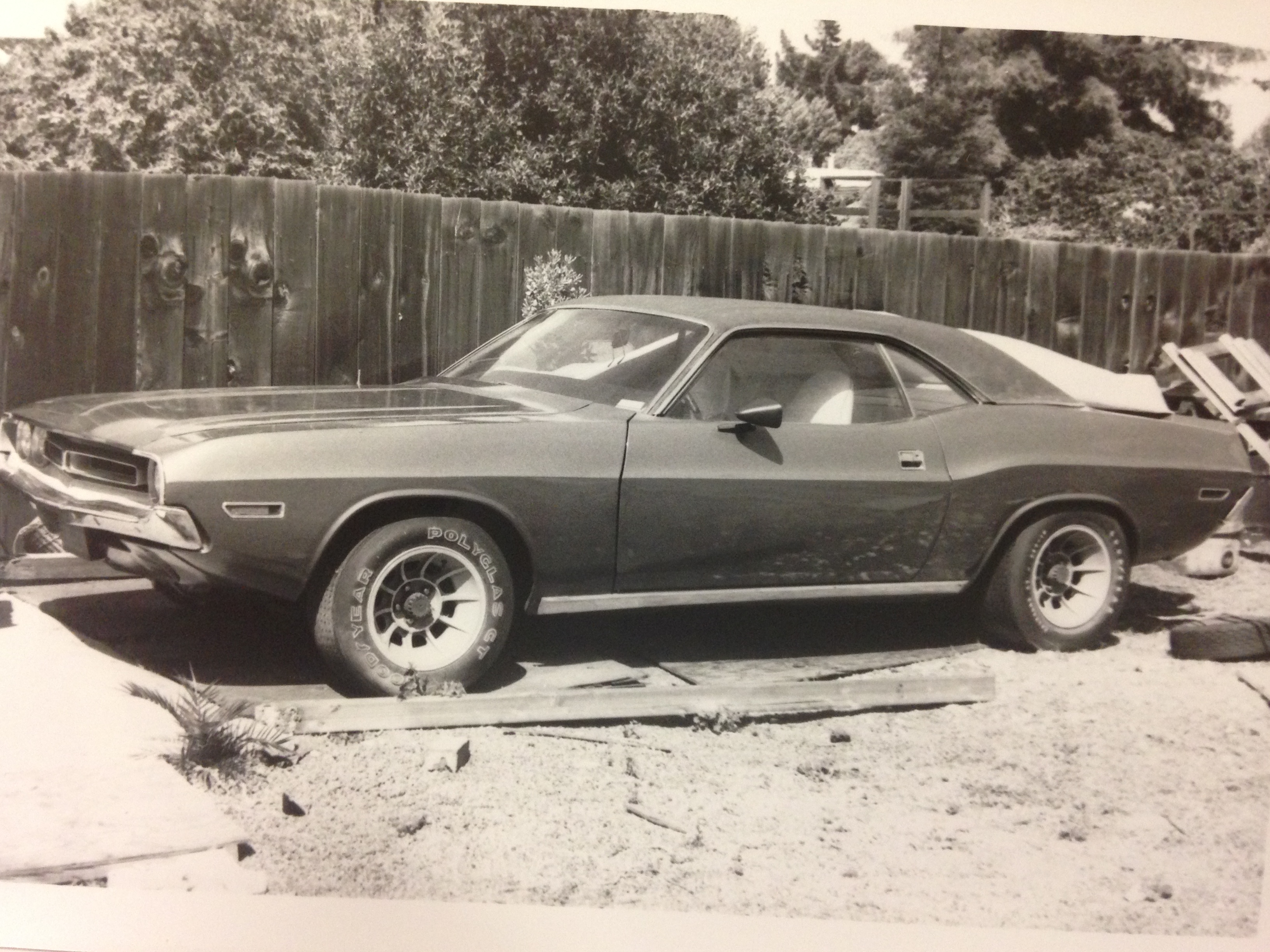
My dad and I checked out a lot of Challengers of all years, but in January of 1978, when I was 15, I finally found a Challenger with a combination I could live with that was under $2000. By this point, my mom was involved and I think she wasn’t interested in me getting a radical fire breathing monster. Funny how mom’s suddenly get involved when that critical moment materializes, as if she’s going to drive it. Buying a Challenger, my first car, becomes a bit of a family affair. We found the Blue Flash in some obscure used car lot in San Jose with about 42,000 miles, previously owned by an old lady. And as far as what you think Challengers are normally, it was a bit of an old lady’s car. It had a floor shift automatic and a 383 two barrel (which still had some awesome torque), single exhaust, no sway bars, dark metallic blue paint with a black vinyl top, power steering with a 5.2 turn box,  a salt and pepper interior with a cigarette burn hole in the back seat, air conditioning, and wire rim hubcaps with 70 series “Mohawk” Tires, and a unique trim package I’ve rarely seen since.  The price was $1700, or $1900 out the door. It ran great. At the time I had $1250, so my Dad helped me with the rest.

first_1

Thanks to my brother Nick Yee, he uncovered this photo with highlights the original condition the 1971 was in before I started tampering with it with my teenage hands. Photo taken about 1978.


Some Random Reminiscing

As with many of the younger persuasion, I slowly began modifying and personalizing my Challenger. I will not go into extensive details here, but suffice it to say that as a young street machine freak, you just do as you feel and that is okay. It was all about whatever you can afford and whatever seems like a cool idea gets the nod of approval. This Challenger turned into my high school ride and also my ride into adulthood. The Challenger was a reliable partner through my high school days: having a really great time cruising with all the motorheads at school, wild burnouts in the back parking lot, road trips, and general partying. We were raising hell on the highways and byways and, fortunately, survived the experience and didn’t hurt others.

Worthy of MoPar note was the quickest car at school owned by Dale Mosher, a hemi-orange 1969 Dart with a 440 six-pack with a black vinyl top and 4.10s in the back. Truly a rad rocket.


The absolute best cruising night was in 1979 when a huge group of us got together to go cruising on a Saturday Night in San Mateo, California. We met in the back parking lot of Palo Alto High School and just about everyone showed up who had the car fever, including the blue Torino Wagon with the yellow dome light pulling unsuspecting motorists over (you know who you are, my friend). I could  start naming people but I’m sure I’d miss someone. If you were there, you’d remember those days before the “No Cruising” law. That strip on El Camino Real was absolutely packed.

We were living the mystique that is conjured in ones mind when you think of the “Muscle Car Era” all the while with Van Halen, AC/DC or Lynyrd Skynyrd blaring in the background. Actually it was the Oil Crisis Era, but we did not care. What was cool was my young nephew and niece used to cheer out, “Dukes of Hazard!” to the sounds of the big block Mopar or how some high school girls used to have their talks while sitting ON my car in the back parking lot at school, thinking it was cool place to hang out.

first_2

This photo was taken by my Navy bud, Michael Avery. I think we were doing some backroad moto-ing in the National forest east of San Diego in 1981.

first_3

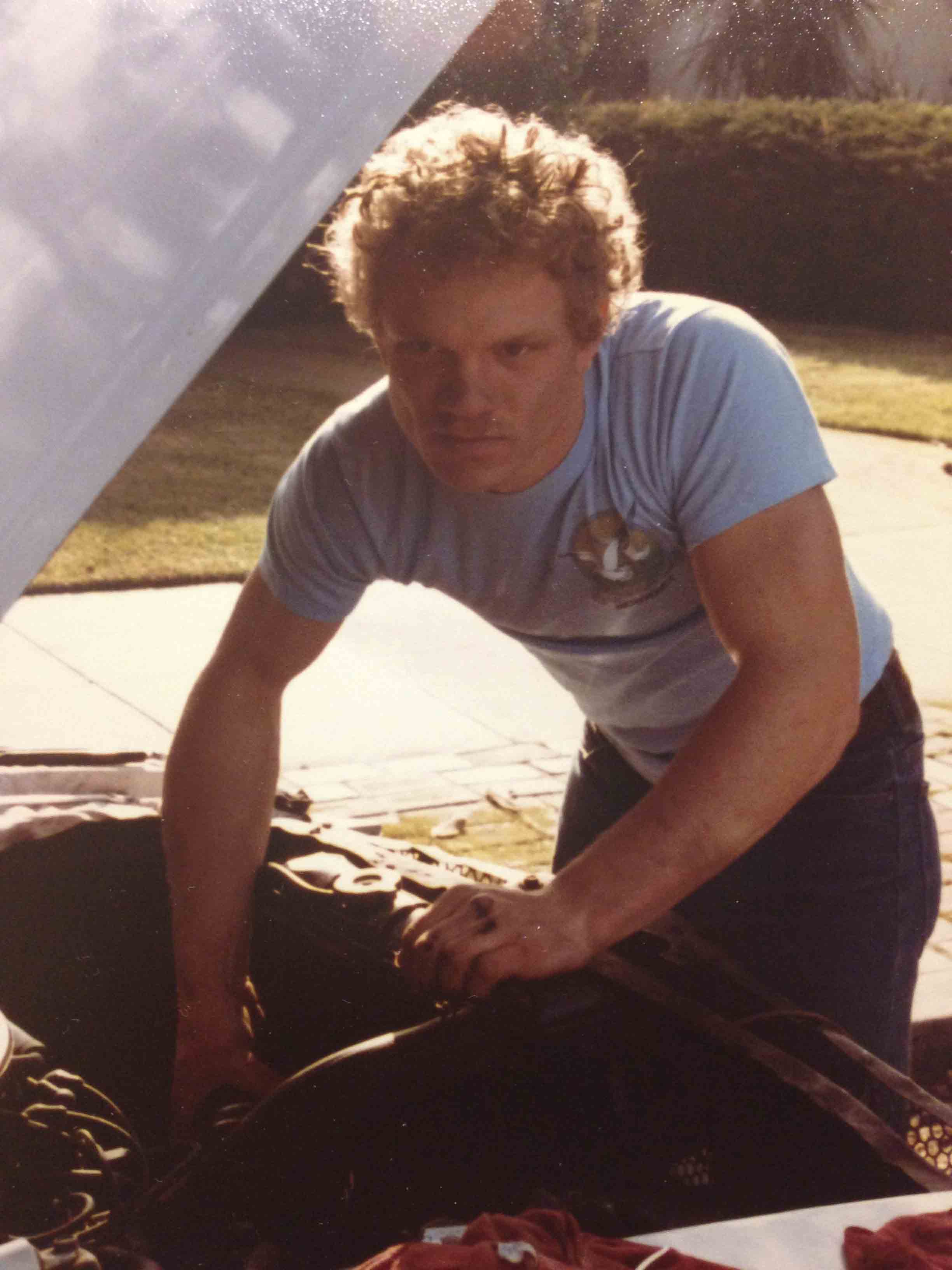
This photo is from my Navy bud, Michael Avery, here I am probably at the Navy gas station or Navy DIY auto shop at Naval Training Center, San Diego in 1981.


A quick rundown of most of my modifications that occurred over time:

Edelbrock Torker,  a Holley 780 CFM with vacuum secondaries, topped off with a Moroso Low Profile Air Cleaner

Eagle Headers and dual exhaust with cross over and Thrush turbo mufflers, tail pipes dumping down over the rear axle

Windage Tray, B&M shift kit, Accel Supercoil, and Mopar Electronic Ignition

American Vector 15×8(?) with Goodyear Polyglas GT G-60 back and F-60’s front (torsion bars needed to raise front end to clear tires)

Addco sway bars front and rear with urethane bushings

KYB Shocks with coils overs in rear (gave me another 1/2″ clearance for my tires)

Stewart Warner under dash mounted Tach

Ducktail T/A type rear spoiler

Sanyo Bi-Amp AM-FM Cassette indash strereo Jensen co-ax rear speakers and some small tweeters in front

Dual racing mirrors from the local Scherba’s Auto Store


In Closing

I could recall a bunch of stuff, but I just want to pitch something out there for you guys to chew on.

Thanks for reading.

First Challenger a 1971 as in the area it was stored while I was away serving overseas in the Navy after 1983.

First Challenger a 1971 as it was in the area it was stored while I was away serving overseas in the Navy after 1983. Friends said that the Amrican Vectors looked great when I was peeling out. When I find my photos of the car when it was stock, I’ll post them. Originally the car had longitudinal side “door-ding” moulding and the biggest piece of chromed pewter wrapped around front edge of the hood and fenders to give the bumper a wrap around look.

This early 1980's photo is of Scott Douglas, the Ford Expert, part of a triad friendship along with Rick Elliot, the Chevy Expert. When I had my Mustang, Scott was always ready to help me with whatever I needed.

This early 1980’s photo  of Scott Douglas, the Ford Expert, part of a triad friendship along with Rick Elliot, the Chevy Expert in the early days at Palo Alto High School. When I had my Mustang, Scott was always ready to help me with whatever I needed.

A partial gathering of the PASM Association, the Palo Alto Street Machine Association. Photo taken by yearbook staff in1979. I was on the yearbook staff that year, so I made sure we got this photo in. Too bad one of my friends decided it was cool too draw over it with his pen. Location, the back parking lot of Palo Alto High School.

Just a partial gathering of the PASM Association, the Palo Alto Street Machine Association. Photo taken by yearbook staff (1979) . I was on the yearbook staff that year, so I made sure we got this photo in. Too bad one of my friends decided it was cool to draw over it with his pen. Location, the back parking lot of Palo Alto High School. Ready for exhibition speed at the slightest provocation.

Three of my Industrial Arts teachers at Palo Alto from 1976-1980, from left to right, Bud Jamison (Architecture), O.D. Mitchell (Auto Shop), and Bob Hoskins (Metal/Algebra/Geometry). All of my teachers were great, but Mr.Mitchell was my favorite through 4 years of Auto Shop. Photo is from my 1979, Junior year, Yearbook.

Three of my Industrial Arts teachers at Palo Alto from 1976-1980, from left to right, Bud Jamison (Architecture), O.D. Mitchell (Auto Shop), and Bob Hoskins (Metal/Algebra/Geometry).Missing is Mr. Don Jang, my drafting teacher for 3 years.  All of my teachers were great, but Mr.Mitchell was my favorite and mentor through 4 years of Auto Shop. Photo is from my 1979, Junior year, Yearbook. I was class of 1980 but 1979 ROCKS!

I didn't know the PALY yearbook staff was not print my write up I submitted with my photo. At the discretion of some high schooler in 1980, I will only be known as the guy with his Challenger

I didn’t know the PALY yearbook staff was not print my write up I submitted with my photo. At the discretion of some unknown high schooler in 1980, I will only be remembered as the kid with his Challenger

* If you enjoyed this post, please LIKE SHARE COMMENT

The Dodge Kid in his youth about 1976. I think I wore this hat everyday through my Freshman year in high school. Photo by Nick Yee

The Dodge Kid in his youth about 1976.

Copyright © 2015 ChallenYee.com. TheDodgeKid.com BestBuckBuck.com All Rights Reserved.

Driving impressions on a Highway On-Ramp

Classic Mopar Driving Impressions – 440 Six Pack

CLICK ON PHOTO GO TO VIDEO (longer than my 15 second Instagram version) or click this link http://youtu.be/0aOvgD-J7cs

hwy_entry_13115

Taking the Challenger out for a spin after running a couple of errands.
Highway on-ramps tend to be a logical place to get an acceleration video clip. I especially like taking to curves with the updated suspension. I would like an opportunity to push the suspension and the tires much harder than on this leisurely cruise onto the highway. The BFGoodrich 235x60x15’s are predictable and hold pretty well for all practical purposes on the street.

Jay Leno mentioned he uses Goodyear’s on his stock 15 inch rally on his 426 Hemi Challenger. I might try so of those next time if I can find them.

*

If you enjoyed this post, please LIKE SHARE COMMENT

The Dodge Kid in his youth about 1976. I think I wore this hat everyday through my Freshman year in high school. Photo by Nick Yee

The Dodge Kid in his youth about 1976.

Copyright © 2014 ChallenYee.com. TheDodgeKid.com  All Rights Reserved.

Simmering over 440 Overheating Problems – Part 5 -FINAL

The long-awaited final part has finally arrived for the overheating issue.

I ran the Challenger without a thermostat for drives to get the maximum clearing effect to catch crud in the copper screen trap I installed in my upper radiator hose. I had also been draining my coolant after every extended drive to flush and dilute out as much old coolant and the green stuff as possible before I pour in the Water Wetter. 

I’ve read several accounts that Water Wetter mixed with normal anti-freeze/coolant will gum up your cooling system as well as not working or not working well. As I mentioned before, I used to run Water Wetter with distilled water in my old open track car. Spilling that on the track was less of  nuisance than dropping coolant. The best cooling is effected by using pure distilled water, but you need the anti-corrosive and lubricating properties of a product like Water Wetter added.


The thermostat gasket managed to last a few removals of the t-stat housing before it died so I replaced the gasket.

The drained coolant, after sitting for a day has what look like a powder sitting at the bottom of the plastic jugs I’ve been storing it in. I’m guessing its the remnants of Bar’s Stop Leak or something. With each draining, the amount is decreasing and is almost negligible now.

.

top side (radiator end) of hiflow thermostat. Removing it from system to flush engine block at high RPM.

top side (radiator end) of hiflow thermostat. Removing it from system to flush engine block at high RPM.

Better cooling performance with a thermostat

I’ve heard that cars can run cooler with a thermostat rather than without one. I think it depends on the design of your cooling system and the positions of the inlet and outlets. On a typical engine with the inlet and outlet on the front, there is a certain amount of inefficiency in regards to the coolant that is in the rear of the engine.

What I noticed was that not only did the engine run cooler, based on my temperature gauge reading, but the subsequent draining yielded more fluid that smelled more like coolant and less like plain water. I take this to mean that there is better mixing of fluid coming back from the radiator in through the engine passages than without a thermostat.

The temperature gauge without the thermostat read in the low “normal”range, but after the thermostat was installed the reading in slightly below the “normal range.”

.

Effect on water pump churning and installed thermostat

So, it appears, with the thermostat installed and resisting the flow of coolant back to the radiator, the water pump has time to churn the coolant inside the engine passages, allowing more mixing before the thermostat opens at the set temperature.


Some extra crud sitting in the upper hose. Clean it.

Some extra crud sitting in the upper hose. Clean it.

Here's the flakey cast iron crud, including some pieces of gasket seal. Also need to brush out crud from upper hose. Copper screen is reusable but check it before reinstalling.

Here’s the flakey cast iron crud, including some pieces of gasket seal. Also need to brush out crud from upper hose. Copper screen is reusable but check it before reinstalling.

rad_crud4

These are a few of the photos I took after before cleaning out the copper filter. I typically get a little less that what you see in this picture as of late.

rad_crud3rad_crud1rad_crud5

At first I was saving the crud from the filter, here is what was in the cooling passages (except for the washer).

At first I was saving the crud from the filter, here is what was in the cooling passages (except for the washer). I stopped collecting it.

.

Catching debris before and after thermostat installed

I’ve been running the copper mesh at the top inlet of the radiator, held in place by the upper hose. Before and after the thermostat was installed, a consistent amount of small debris are being caught. They look like small pebble-like cast iron flakes from the water passages in the engine. One piece of copper mesh lasts several cleanings. High RPM runs causes a better flushing action as indicated by the amount of crud being caught.

This process would be a lot more efficient if you could pop the freeze plugs and flush out the engine that way, but if you can’t…. well it takes several rounds to clear out. I ended up adding the Water Wetter finally after I managed to drain out the coolant with just a whiff of coolant smell. The heated water comes out with a brown tint from going through the 200+ degree iron passages.

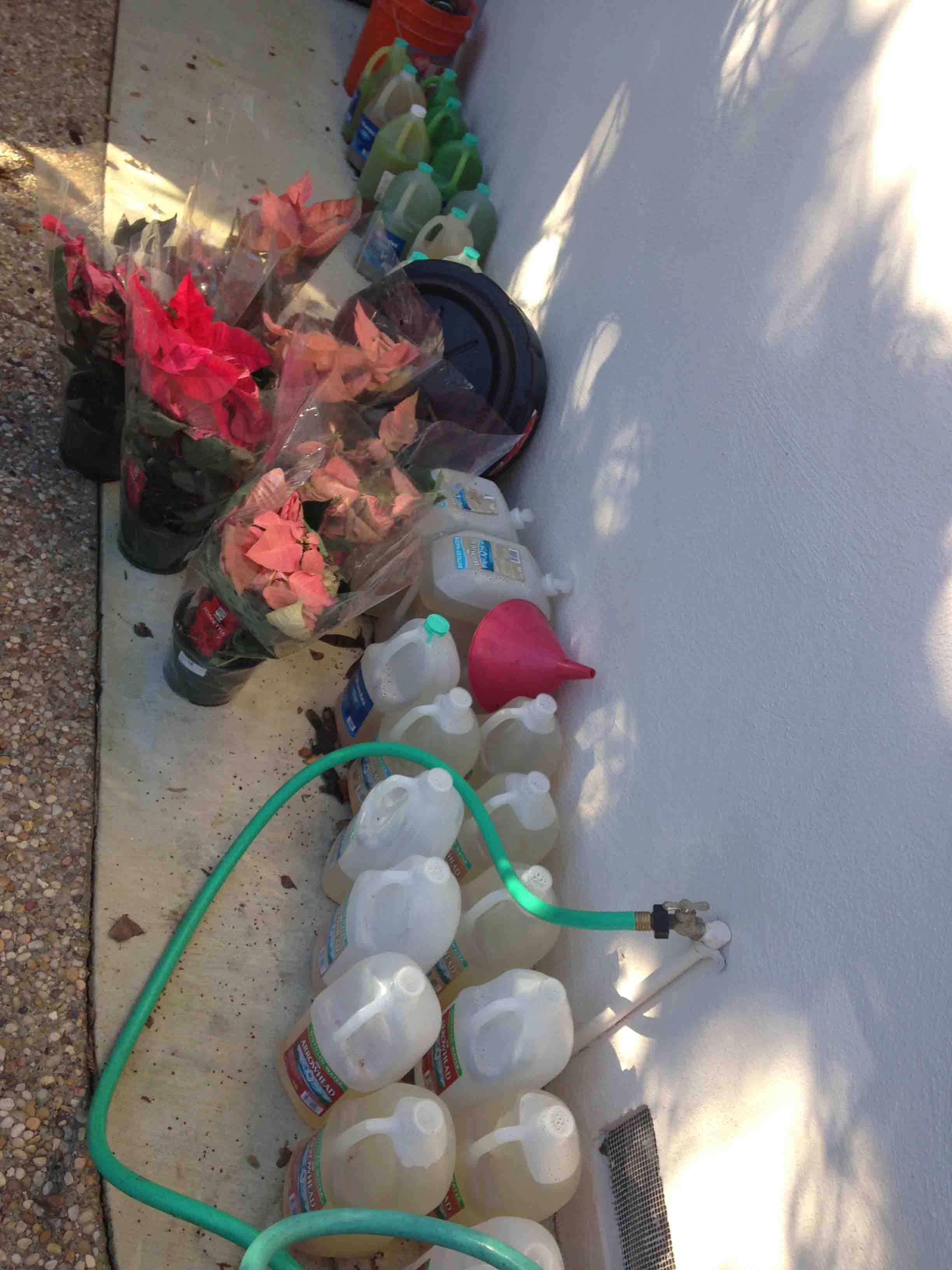
Here's my running collection of drained coolant. Notice the progression from top to bottom from the traditional 50/50 coolant water mix to virtually pure distilled water.

Here’s my running collection of drained coolant. Notice the progression from top to bottom from the traditional 50/50 coolant water mix to virtually pure distilled water. About 2.5 gallons every drain. You do the math. Yes, I’ve called it quits when it comes to draining. Before I put the thermostat back in I managed to get a non-coolant scent in the drain, but after I put the thermostat back in, I get at least a small scent from the drained coolant. Poinsettias not included.


Miscellaneous tips

.

 fanbelt1

Lonesome Dove Fan Belt Tightening

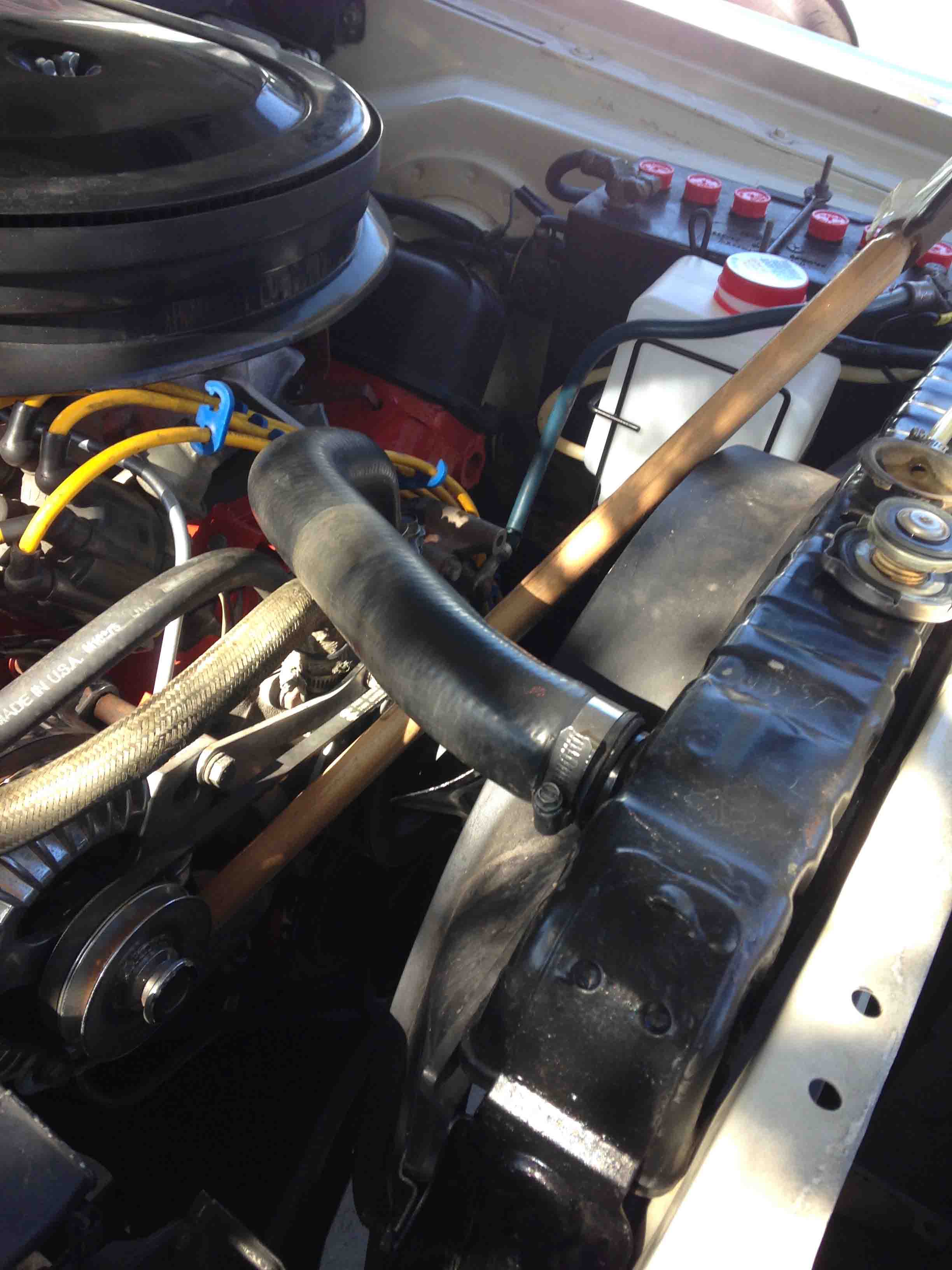
How about it you are alone and need to tighten your fan belt. If you have a handy wooden-handled ax  like I have pictured, you can use that for leverage to extend your alternator after you loosen your holding screws.


.

.

rad_seal1

rad_seal2

Just in case you were interested in reading the small print on the bottle.

rad_seal3

Pesky coolant drip from the lower radiator hose?

The lower radiator hose had a slow drip, so I sanded the outlet pipe with #80 grit paper and felt for any imperfections in the pipe. Then I used Permatex Aviation Form-A-Gasket Sealer #3 with the intention that I don’t want to have to think about any more leaking there. I only coated the radiator pipe and let it set for the required time before sliding the new uncoated hose on and clamping it. I did that to eliminate any possible dripping of sealant into the hose.

I used the same Permatex product on the thermostat housing. It’s a little messier than using silicon but I gave it a go and it works. Again, no intention of removing the housing unless I expect to replace the gasket. The thermostat should be sitting inside a recess in the T-stat housing and should be not interfering with the gasket. Clean the surfaces first of old gasket and sealant before applying the new sealant.

.

.

Carb Backfiring

I’m not sure exactly what was causing my 440 to pop out the carbs, but the problem appears to have gone away except on rare occasion.

However, I have a few possible candidates for culprits.

After several high RPM runs (over 5000) I could have blown the combustion chambers cleaner or it could be the number 7 plug wire touch a header tube and had a couple inches of insulation burned away, cause for some arcing. I adjusted the routing of the wire away from the header.

I plan on replacing the plug wires later.

I would imagine any multiple carb set up could use some more tuning. Have to keep that for later. Also toying with the idea of replacing the old MP electronic ignition with a multiple spark discharge type.

.


*

If you enjoyed this post, please LIKE SHARE COMMENT

The Dodge Kid in his youth about 1976. I think I wore this hat everyday through my Freshman year in high school. Photo by Nick Yee

The Dodge Kid in his youth about 1976.

Copyright © 2014 ChallenYee.com. TheDodgeKid.com  All Rights Reserved.

Highway Entry with Kids in Car

Out for a Sunday drive with the kids and testing a new video mount that I have attached to my dome lamp ring.

Click on image below to access a SHORT 15-second You-Tube video


Click for video

CLICK ON IMAGE TO ACCESS A SHORT 15-second YOU-TUBE VIDEO


video link you-tube:     http://youtu.be/-dnyiuaI9Ow
*


An update about the cooling system

The car runs cool as a cucumber now after the radiator was hot tanked an reversed-flushed.

I’m still running the old coolant out of the engine as I have drained the coolant several times and have almost reaching the point where I’m running pure distilled water. I’ll write the last “Simmering of 440 Overheating Issues” later, but you may be interested to know the engine runs cooler with a thermostat. The reason is (based on my observations of the drained fluid) the thermostat allows the fluid to churn more effectively throughout the cooling passages in the engine. In other words, without the thermostat, coolant coming from the radiator tends to go directly back out the upper hose rather than being forced rearward into the engine to exchange more thoroughly with heated fluid. I’ll share my observation why I think this later.

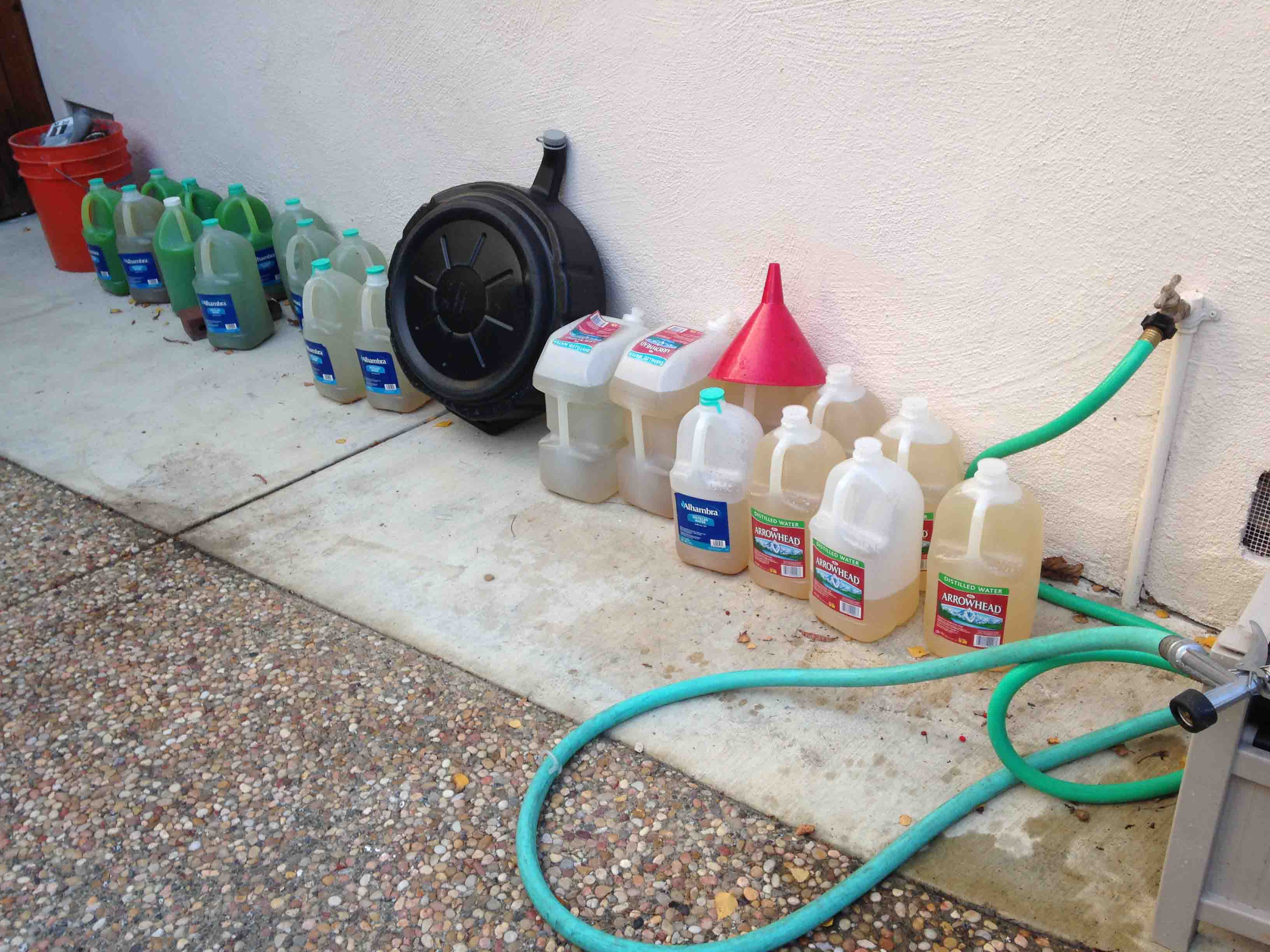
Here is my collection of drained coolant from my 440. Notice the progression from left to right. I empty about 2.5 gallons per draining. I'm almost at a pure enough state I'm willing to add the Water Wetter. I have some observations about before and after installing the thermostat which I will share in a later article.

Here is my collection of drained coolant from my 440. Notice the progression from left to right. I empty about 2.5 gallons per draining. I’m almost at a pure enough state I’m willing to add the Water Wetter. I have some observations about before and after installing the thermostat which I will share in a later article.


**


If you enjoyed this post, please LIKE SHARE COMMENT

The Dodge Kid in his youth about 1976. I think I wore this hat everyday through my Freshman year in high school. Photo by Nick Yee

The Dodge Kid in his youth about 1976.

Copyright © 2014 ChallenYee.com. TheDodgeKid.com  All Rights Reserved.

I’d take that Whine anytime

Writer’s Note: This is a continuation of my flashback series about some of my teenage experiences with Challengers in the 1970’s.


If only I had the chance again…


Scanning the local papers for ads became my new religion.

I was getting pretty good at understanding all the cryptic abbreviations, like people trying to fit all the critical data into something smaller than a Twitter post. Little codes like: “stick” “PS” “PB” “dual” “383-2” “440-4″ ‘RT” “dana” “Rally” ” “AC” “disk” “console” “AT” “hemi” ‘6pk” “F60” “SE” “blk int” “needs paint” “needs body” “runs” “6cyl” “conv” “needs mech” “FAST” “dana60” “rblt eng.” “red” “green” “purple” “orange” “blue” “race” “lo mi” “4 sp” “side pipes” “headers” “Holley” “4 bbl” and so on – all these gave you some idea what was out there.

I’d see an ad for a Challenger and then dream about it every day until my dad and I could go check it out.

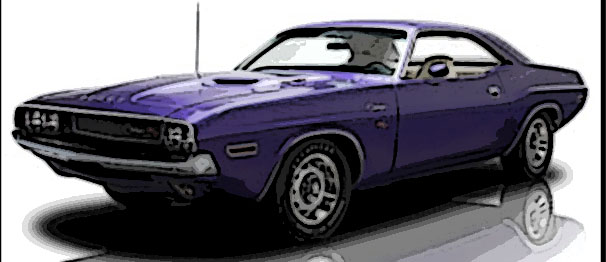
One time, there was a 1970 R/T with a 340, Plum Crazy purple with a black interior and white vinyl top, and a FOUR SPEED (again!). We went to check her out at a used car lot in Sunnyvale which was about 20 minutes away.

CCS_hacienda

A photo I found on Google and added special effects. It kind of resembles the first Challenger I ever rode in. My dad drove it on a test drive from a used car lot.


I remember this day like it was almost yesterday. The sun was shining, as the awesome purple colored R/T sat menacingly along the sidewalk on the lot of Hacienda Motors, facing El Camino Real like it wanted to tear the road apart.

I was still under-aged and gun shy of powerful 4 speeds, so I let my dad test drive. I thought that was really cool watching dad drive the car. He wasn’t a muscle car nut by my standards, but he enjoyed driving and always seemed to take my interest in Challengers seriously. To a kid growing up, that was a great affirmation that I wasn’t completely insane.

My dad didn’t spend much time with me playing catch or playing games or a lot of things that most people might expect but he did try to meet me where I was with Challengers and that says a lot to me as I look back.

This was the first time I ever rode in a Challenger as my dad had to fiddle with the reverse-lockout pistol grip  four speed shifter. It seemed like this could be a really decent car. Just the “340 Four Barrel” emblem on the scooped hood seemed to make this bad-boy scream ‘I am one ass-kicking muscle car’.

They wanted $2150.

I remember how it started and how great it was to hear the R/T pipes rumble, the symphony of mechanical parts permeating the air. This was no plain car, no way.

As dad got the R/T out onto the local side street, he applied the gas and started shifting gears, revving the engine, and glancing at the tach on the rally dash Everything seemed fine, except for this awful grinding sound that sprang up when we picked up some speed that crescendoed into some coarse mechanical whining that was about as loud as the exhaust.

My heart broke.

We chose not to get the car.

Looking back, the problem may have been a differential simple swap, but we figured we could find something better for the price – something that didn’t have any major problems.

It would sure be nice to have that one. A sweet car with a whine that nowadays couldn’t have been any sweeter.

*

If you enjoyed this post, please LIKE SHARE COMMENT

The Dodge Kid in his youth about 1976. I think I wore this hat everyday through my Freshman year in high school. Photo by Nick Yee

The Dodge Kid in his youth about 1976.

Copyright © 2014 ChallenYee.com. TheDodgeKid.com  All Rights Reserved.